

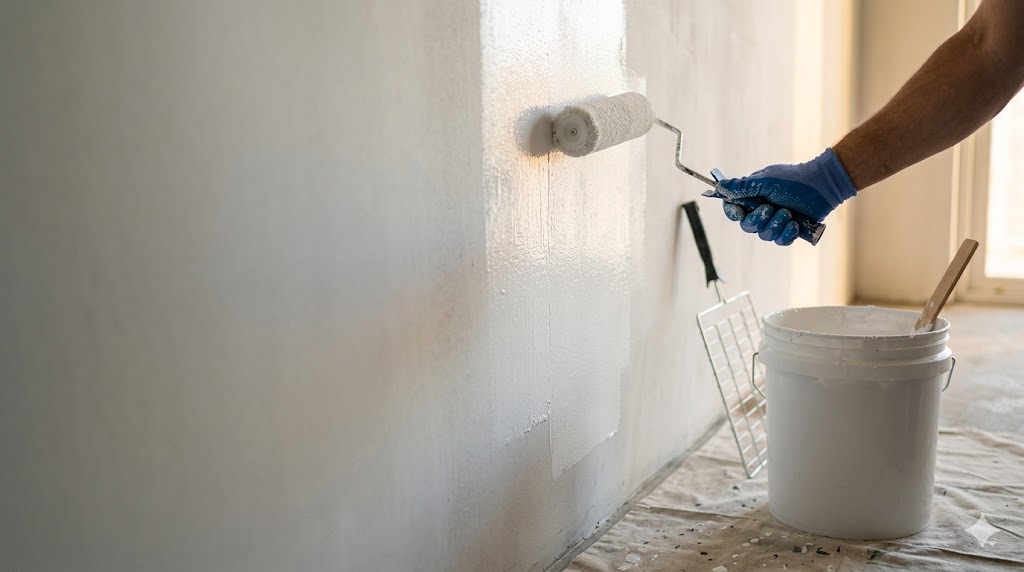
Thermal paint is a water-based heat-insulation coating applied like paint to reduce heat transfer. Unlike ordinary paint, it reflects radiant solar heat, filters conductive heat and pulls surface temperature into the comfort band. ISO THERMAL thermal paint unites heat, water, sound, moisture and fire resistance in a single coat.
How does thermal paint work?
- Radiant reflection: reflects solar radiation off the surface.
- Low conductivity: 0.028 W/mK slows heat passing into the structure.
- Breathability: allows vapour diffusion, preventing condensation and mould.
In field tests an untreated façade reaches 70-75 °C in summer while an ISO THERMAL surface stays at 40-45 °C.
Advantages
- Heat, water and sound insulation in one coat
- Lightweight: 600-650 g/m²
- 540 °C flame threshold
- Antibacterial, breathable, water-based
Where is it used?
Thermal paint is applied across ten areas — see our applications page. It bonds to almost any surface without primer.
Conclusion
A thin, light, versatile and economical insulation solution. Contact us for a free survey.